
Blog
Essential Holiday Tips for Pets Owners
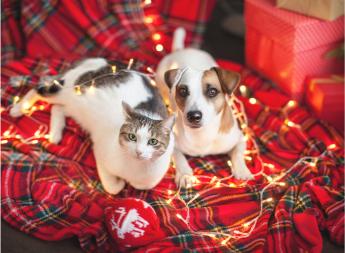
With the myriad risks to pet safety during the holidays, this time of year may not be the most relaxing. The good news is that the more pet owners think about, and anticipate, the possible hazards to pet health, the better their odds at avoiding an emergency. We can help you arrive at a place that promotes your pet’s wellness during the holidays and enhances feelings of connection during the coziest of seasons.
Human Food
It can be hard to say no to a pet’s pleading eyes, but it’s best to resist the temptation. Many holiday foods are flavored with onions, garlic, and chocolate (to name a few emergency room culprits) and should be handled with extreme care. Similarly, watch out for:
- Xylitol (aka: wood sugar, birch sugar, birch bark extract)
- Caffeine
- Alcohol
- Grapes/raisins
- Fatty foods
Limit your pet’s access to these dangerous foods by displaying foods on surfaces they cannot reach, storing foods behind closed cupboards, and emptying trash bins regularly to reduce enticing smells.
Decorations
Aside from potential poisoning from holiday foods, there’s another risk to the GI tract. Ingesting decorations like ribbon, bows, tinsel, wrapping paper and ornaments can be disastrous to pet health.
- Secure your tree to the back wall and/or ceiling and opt out of decorating low branches.
- Try to find ornaments that are shatterproof.
- Simmering potpourri and live flame candles should only be displayed on surfaces that are out of a pet’s reach.
- Electrical cords must not be on the floor or loose enough to cause entanglement or strangulation.
Christmas Trees
The Christmas tree is central to the revelry, but it can be dangerous to pets. Be sure to keep the water covered, as fertilizers and pesticides can leach away from the tree and collect in the stand. Pick up loose or fallen needles to prevent injury to delicate paws or consumption.
Holiday Plants
Holiday plants are beautiful, but they can be toxic hazards to your pets. When decorating, placement is key. Always keep dangerous items out of reach to avoid unnecessary trips to the veterinarian.
Plants to Avoid:
- Lillies
- Amaryllis
- Yew
- Holly and Mistletoe
- Snowdrops
What About Poinsettias?
Poinsettias are generally only mildly toxic to pets, and the danger is often greatly exaggerated compared to other holiday plants. The milky white sap found in poinsettia stems and leaves contains chemicals that can be irritating. If your dog or cat ingests a piece, they are likely to experience mild stomach upset.
While poinsettias are not highly dangerous, it is always best to keep them out of your pet’s reach to prevent any unnecessary upset or a trip to the vet.
Travel and Party Spaces
Whether you’re traveling to be with family or friends, or hosting this holiday season, it’s critical to take every measure of comfort and safety into consideration. Be sure that your pet is safe while traveling by investing in a travel crate or kennel, a comfortable harness, and a pet-specific seatbelt.
It’s a good idea to keep up your pet’s routine as much as possible. Maintain their regular meal times, bathroom breaks, and exercise times. If you’re traveling to a colder state, watch out for antifreeze leaks and over exposure to freezing temperatures.
Always have your pet’s microchip information up to date, keep prescription medications on hand, and schedule walks or company for your pet if you have to be away from home for longer stretches of time.
Holidays and Pets
If we can assist you with questions or concerns about your pet’s health and safety, please contact us at (210) 696-1700. From all of us at Ten West Bird and Animal Hospital, have a safe and memorable holiday.